To succeed in the competitive quick-service restaurant world, owners and operators need leverage technology. Unfortunately, many restaurant owners quickly find themselves entangled in a complicated restaurant tech stack as they scale their businesses, leading to the very thing they tried to avoid: reduced productivity and increased financial strain.
A complicated restaurant tech stack can quickly go from annoying to devastating when left unchecked. In this article, we dive into a number of ways that a complicated tech stack can hurt your business and, more importantly, how to simplify your restaurant’s tech stack to put your restaurant on the path to profitability.
3 Pitfalls of a Complicated Restaurant Tech Stack
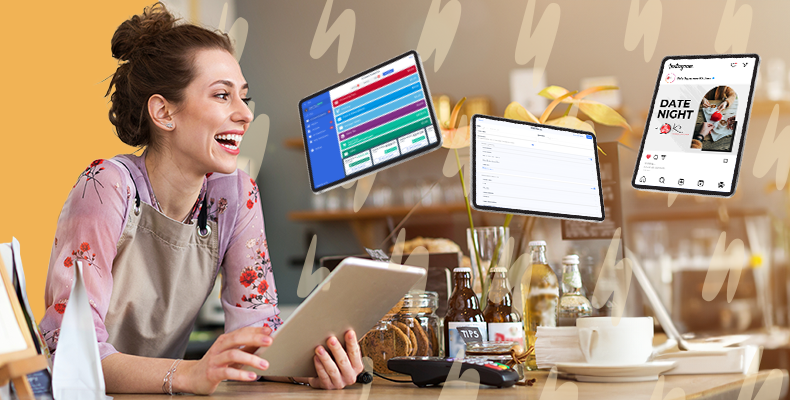
The journey from a simple to complicated restaurant tech stack often begins with a basic Point of Sale (POS) system. But as a restaurant grows, so do its technological needs. Owners find themselves adding on various solutions for online ordering, digital menus, kitchen workflows, and more. But these various systems rarely work together seamlessly, creating a tangled mess of manual connections and upkeep. This level of complexity not only disrupts daily operations but also strains staff and compromises customer satisfaction.
Difficulty Training and Decreased Efficiency
Training new staff becomes a daunting task when they’re expected to navigate through multiple systems. Each additional app or software introduces another layer of complexity, increasing the likelihood of errors and decreasing efficiency. Simplifying your restaurant tech stack streamlines the training process, allowing staff to focus on mastering one easy-to-use platform and get the hang of things quicker. This, in turn, boosts productivity and morale, leading to smoother operations and happier customers.
Tricky Troubleshooting and Support
Technical issues are unfortunately inevitable, but an overcomplicated tech stack makes these problems 10x worse. When a glitch occurs, pinpointing the root cause is like finding a needle in a haystack: critically important but seemingly impossible. Lost hours spent troubleshooting not only disrupt restaurant operations but also result in lost revenue and frustrated customers. Simplifying the tech stack centralizes support, making it easier to identify and resolve issues fast, minimizing downtime and preserving customer satisfaction.
Heavy Financial Burden & Complex Subscription Management
Managing a bunch of technology subscriptions is a headache for many restaurant owners. What starts as a cost-effective solution quickly spirals into a tangled web of bills, rate hikes, and hidden fees. In an industry with razor-thin profit margins, every dollar counts. Simplifying your restaurant tech stack not only reduces unnecessary expenses but also provides greater financial predictability, enabling owners to allocate resources more strategically and invest in growth initiatives.
Learn how 600 restaurant owners plan to tackle their technology needs in the latest Nation’s Restaurant News Industry Report
Simplify Your Restaurant Tech Stack
The path to simplifying your restaurant’s tech stack begins with finding the right partner—a provider that understands the unique needs of quick service restaurants, coffee shops, and food trucks, and offers tailored solutions. When evaluating potential technology partners, consider the following:
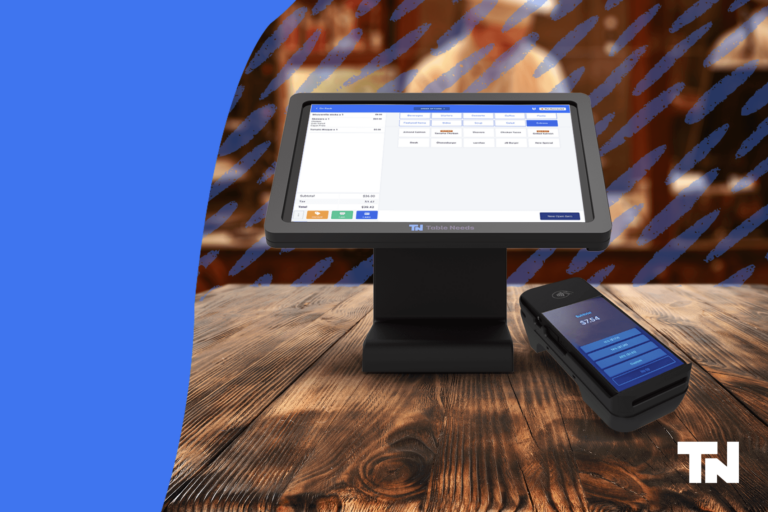
- Comprehensive Solution: Look for a provider that offers a robust suite of services that includes a range of restaurant operations, from POS and online ordering to restaurant budget management and marketing. A one-stop-shop solution, like the Table Needs Restaurant Operations Platform, eliminates the need for piecemeal integrations and ensures seamless compatibility across all functionalities.
- Scalability: Choose a solution that can grow with your business. Scalability is essential for accommodating future expansion and evolving technological needs without undergoing costly hardware upgrades or software migrations. A flexible platform allows you to adapt to changing market conditions and customer preferences while maintaining operational efficiency.
- Easy to Use: Prioritize user-friendly interfaces and intuitive workflows. A solution that is easy to learn and navigate minimizes training time and reduces the risk of errors. Streamlined processes empower staff to focus on delivering exceptional service rather than grappling with cumbersome software.
- Reliable Support: Assess the provider’s customer support offerings, including response times, availability, and expertise. A dedicated support team familiar with your specific setup can quickly address any issues that arise, minimizing disruptions to your business. Look for providers that offer comprehensive training programs and ongoing assistance to ensure maximum utilization of the platform.
Benefits of Streamlined Technology
The advantages of simplifying your restaurant’s tech stack extend far beyond operational efficiency and cost savings. By consolidating systems and embracing a unified platform, you can:
- Enhance Customer Experience: Seamless integration and streamlined workflows translate to faster service and fewer errors, leading to greater customer satisfaction and loyalty.
- Empower Staff: Simplified technology empowers staff to focus on what they do best—providing exceptional service. With intuitive tools at their fingertips, they can deliver top-notch service and forge meaningful connections with guests.
- Drive Growth: By freeing up resources and eliminating unnecessary expenses, a streamlined tech stack creates opportunities for growth and innovation. Whether expanding to new locations or launching new menu offers, you can invest confidently in the future of your business.
See Our Simplified Restaurant Tech Stack in Action
Ready to simplify your restaurant’s tech stack and get started on your path to profitability? Sign up for a personalized, hassle-free demo with our restaurant experts to explore how the Table Needs Restaurant Operations Platform can move your business forward.